If you've ever sat in a meeting where someone casually dropped "UX" and "UI" like they were the same thing — you're not alone. Even experienced marketers mix them up. And honestly? The confusion makes sense. The two work so closely together that they can feel inseparable.
But here's why it matters for your business: treating them as the same is like confusing the floor plan of a building with its interior design. Both matter. Both serve completely different purposes. And getting either one wrong will cost you customers.
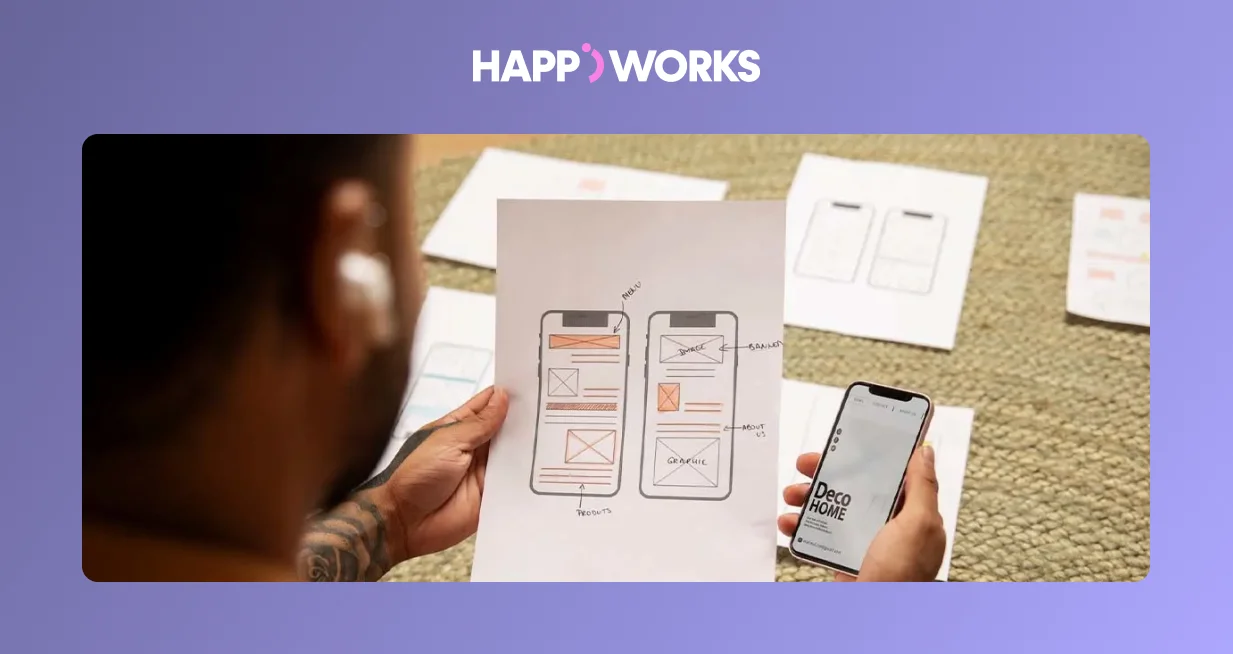
UX - User Experience — is the strategy behind your website.
It's the research, the thinking, and the structure that determines whether a visitor can accomplish what they came to do. Can they find your services in two clicks? Does the contact form feel effortless?
Does the page flow guide them naturally toward a decision - or does it leave them guessing?
Good UX is rooted in understanding your specific audience. Who are they? What do they need? Where do they get frustrated? The answers shape everything: your navigation, your content hierarchy, the order of your pages, and the journey from "I just found this site" to "I just filled out the contact form."
When UX is done well, users don't even notice it. Everything just works. When UX is broken, they leave - and they usually don't tell you why.
UI - User Interface - is how your website looks and feels.
It's the colors that communicate your brand personality, the typography that signals whether you're premium or budget, the buttons that guide the eye, and the spacing that makes a page feel clean and considered versus rushed and cluttered.
UI is what earns trust in the first few seconds. Research consistently shows that users form a visual judgment about a website almost instantly. If your interface looks dated, generic, or inconsistent, potential clients will quietly move on to a competitor - even if your service is genuinely better.
Great UI is also highly intentional. It uses visual hierarchy to lead users toward the most important actions. It creates consistency across every page so your brand feels cohesive and reliable. And in 2026, it absolutely must look sharp on both mobile and desktop - because your customers are switching between both.
UX is the journey. UI is the destination.
Or think of it this way: UX decides where the door is. UI makes the door beautiful enough that people want to walk through it.
You need both. A stunning interface with confusing navigation will frustrate users into leaving. A perfectly structured site that looks like it was built in 2015 will fail to earn trust before users even read your headline.
Message Us

User Experience (UX) focuses on the overall journey a user has with a product, ensuring it’s easy, intuitive, and enjoyable. It involves understanding user needs and behaviors to improve the product’s functionality.User Interface (UI), on the other hand, is about the visual design; the buttons, layouts, colors, and fonts that users interact with. While UX is about experience, UI is about creating a visually appealing and user-friendly interface. Both are essential for a seamless product.
UX:Centers on the user’s journey and overall experience.
UI: Concentrates on the specific elements that users interact with.
UX:Aims to enhance user satisfaction by improving usability and accessibility.
UI: Seeks to create an engaging and aesthetically pleasing interface.
UX:Involves research, testing, and iteration based on user feedback.
UI: Focuses on the visual layout and interactive design elements.
Here's where this gets real.
Bounce rate is a UX + UI problem. If visitors are landing on your site and leaving without taking action, the culprit is almost always one of the two - or both. Maybe the navigation is confusing (UX). Maybe the page doesn't look trustworthy (UI). Either way, it's costing you leads.
Conversions are a UX + UI problem. The path from "interested visitor" to "booked client" needs to be clear, fast, and frictionless (UX) - and it needs to look credible and on-brand the whole way through (UI). When both are strong, conversion rates go up without spending more on ads.
Google rankings are increasingly tied to both. In 2026, Core Web Vitals and user engagement signals are part of Google's ranking algorithm. Sites that load fast, keep users engaged, and guide them through clear journeys rank higher. That's UX and UI working together to boost your SEO.
When a business comes to us ready to build or rebuild their Webflow website, we don't start with design. We start with questions.
Who is this site for? What do they need to feel, know, and do? What's the one action we most want them to take? What's getting in the way of that right now?
That thinking shapes the UX - the structure, the content flow, the hierarchy of every page. Only then do we build the UI on top: a visual layer that's intentional, on-brand, and built to earn trust at first glance.
The result is a website that works hard for your business - not just one that looks great in a screenshot.
Whether you're starting from scratch or wondering why your current site isn't converting, we'd love to talk. Our team specializes in Webflow design and development that's built around your business goals - not just beautiful templates.
Work With Us
Take a moment to explore our blogs and stay updated on the latest design trends, SEO strategies, and development insights. Whether you're a creative professional or a tech enthusiast, there's something for everyone!