
Mental Health Organization Serving Refugees and Immigrants Deserves More Than Word of Mouth. It Deserves a Platform.
How Happiworks Built Healthstar's Digital Presence From Zero — and Gave an Underserved Community Somewhere to Turn

The Challenge
When a refugee family arrives in North Carolina, they bring trauma most of us will never understand.
- The language barrier is immediate.
- The cultural isolation is profound.
- The mental health needs are urgent.
- The systems designed to help — therapists, counselors, community organizations — are largely invisible to the people who need them most.
Healthstar was built specifically to close that gap:
- Culturally sensitive care
- Linguistically appropriate support in English, French, Swahili, Creole, and Spanish
- A leadership team with deep personal roots in the communities they serve
The mission was real, the need was undeniable, and the founders had the credentials and the compassion to deliver on it.
But they had no website.
That meant families searching for culturally appropriate mental health support had no central digital destination to understand the organization, explore its services, or determine how to get help.
Community partners had no single platform to reference.
And grant committees or potential supporters had no digital presence through which to verify the scale and seriousness of the organization.
Healthstar didn’t need a website simply because every organization is expected to have one.
They needed digital infrastructure that could make their services discoverable.
The Digital Infrastructure Gap
Starting without an existing website created three fundamental challenges.
| Challenge | What was happening | Why it mattered |
|---|---|---|
| The Visibility Gap | Healthstar had no central digital presence for its services or mission | Families, community partners, and supporters had no obvious place to discover or verify the organization |
| The Language Barrier | Healthstar serves communities across multiple languages | A single-language experience would immediately exclude part of the audience the organization exists to serve |
| The Community Infrastructure Gap | There was no digital architecture for events, initiatives, resources, or community outreach | Important programs and initiatives were harder to communicate, promote, and scale |
The solution couldn’t simply be a brochure website.
It needed to become Healthstar’s digital front door — accessible to the people who needed its services and credible to the people who could help the organization grow.
The Strategy
The build came down to three priorities:
| # | Priority | What it meant |
|---|---|---|
| 1 | Multilingual architecture first | Four language versions built into the CMS from day one, not retrofitted after launch |
| 2 | Trust-centered design | A UI that communicates warmth, credibility, and cultural sensitivity before a single word is read |
| 3 | Event and community infrastructure | Dynamic pages that let the Healthstar team publish and promote initiatives without developer dependency |
This was a white-label engagement — Happiworks designed and developed the full platform behind the scenes, delivering a production-ready asset the client could own and operate independently from launch day.
What Happiworks Delivered
Not a template.
Not a quick launch.
A purpose-built platform designed around the specific demands of a multilingual, community-serving mental health organization — one that needed to communicate trust and accessibility to audiences who have very good reasons to be skeptical of institutions.
The new platform was built around three core capabilities:
Multilingual Access
The site launched in four languages with one-click switching between them.
Rather than treating translation as something to bolt onto the website later, multilingual architecture was considered from the beginning of the build.
That meant the CMS and page structure could support Healthstar’s actual audience from launch.
Community & Event Infrastructure
An events infrastructure gave Healthstar a public-facing home for community initiatives and seminars.
The team can now publish and promote important initiatives without relying on a developer for every update.
Clear Service Pathways
Service pages were structured to guide first-time visitors — many of whom have never navigated a U.S. healthcare or mental health system before — toward the right support without unnecessary friction or confusion.
The website needed to answer a simple question quickly:
“Can this organization help me or someone I know?”
Performance at a Glance
The platform was engineered to be fast and stable across devices and language versions.
| Metric | Result | What it means |
|---|---|---|
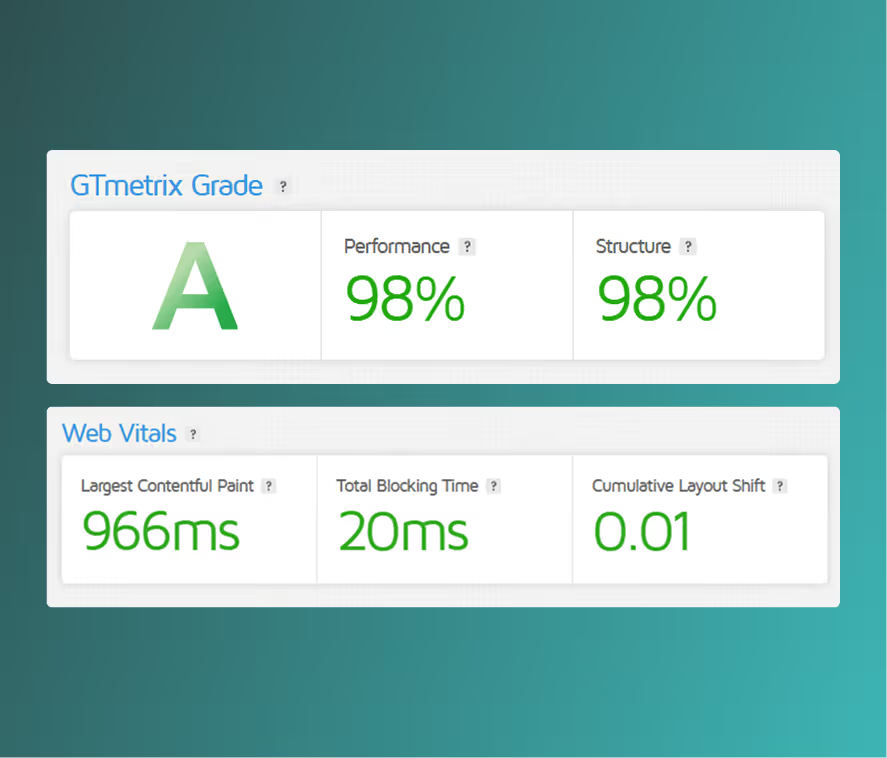
| GTmetrix Grade | A — 98% Performance / 98% Structure | Strong technical performance and site structure |
| Largest Contentful Paint | 966ms | Primary page content loads in under a second |
| Total Blocking Time | 20ms | Extremely little interference between page loading and user interaction |
| Cumulative Layout Shift | 0.01 | Near-perfect visual stability across devices and language versions |
For a community that accesses services primarily on mobile, in multiple languages, often on slower connections — these numbers aren’t vanity metrics. They’re equity.
Speed determines whether a family can actually access the information they need.
Stability determines whether that information remains usable.
And accessibility determines whether the platform serves the audience it was built for.
From Zero Digital Presence to Community Infrastructure
Healthstar started the project without an existing website.
That changed what the platform needed to accomplish.
The new site wasn’t simply designed to make the organization look more established.
It became the infrastructure through which Healthstar could:
- Explain its mission
- Introduce its services
- Reach multilingual audiences
- Promote community initiatives
- Publish events
- Build trust with families
- Give community partners somewhere to direct people
- Give supporters and grant committees somewhere to verify the organization
The website became an extension of the organization’s mission rather than simply a digital brochure.
Key Business Takeaways
Accessibility Is Trust
For a mental health organization serving audiences who are often skeptical of institutions, speed, clarity, and language access aren’t nice-to-haves.
They’re the first proof that the organization actually understands who it’s serving.
Multilingual Can’t Be an Afterthought
Building four language versions directly into the CMS from day one — rather than bolting translation on later — meant the platform could serve its real audience from launch, not months after.
A Website Can Be Built-From-Zero Infrastructure
Starting with no digital presence at all meant the new platform had to do more than look good.
It had to function as Healthstar’s primary way of being found by families, community partners, and grant committees alike.
The Platform Needs to Scale With the Mission
Healthstar’s work will continue to evolve.
New programs, events, resources, languages, and community initiatives can now be incorporated into a structured CMS rather than requiring the entire website to be rebuilt each time the organization grows.
What Changed
| Before | After |
|---|---|
| No website | Purpose-built digital presence |
| Limited online discoverability | Central platform for discovering Healthstar’s services |
| No multilingual digital infrastructure | Four-language website architecture |
| No dedicated event infrastructure | Dynamic community and event pages |
| No centralized service information | Clear service pathways for first-time visitors |
| Limited digital credibility | Professional platform built around trust and accessibility |
| Developer-dependent updates | Manageable Webflow CMS |
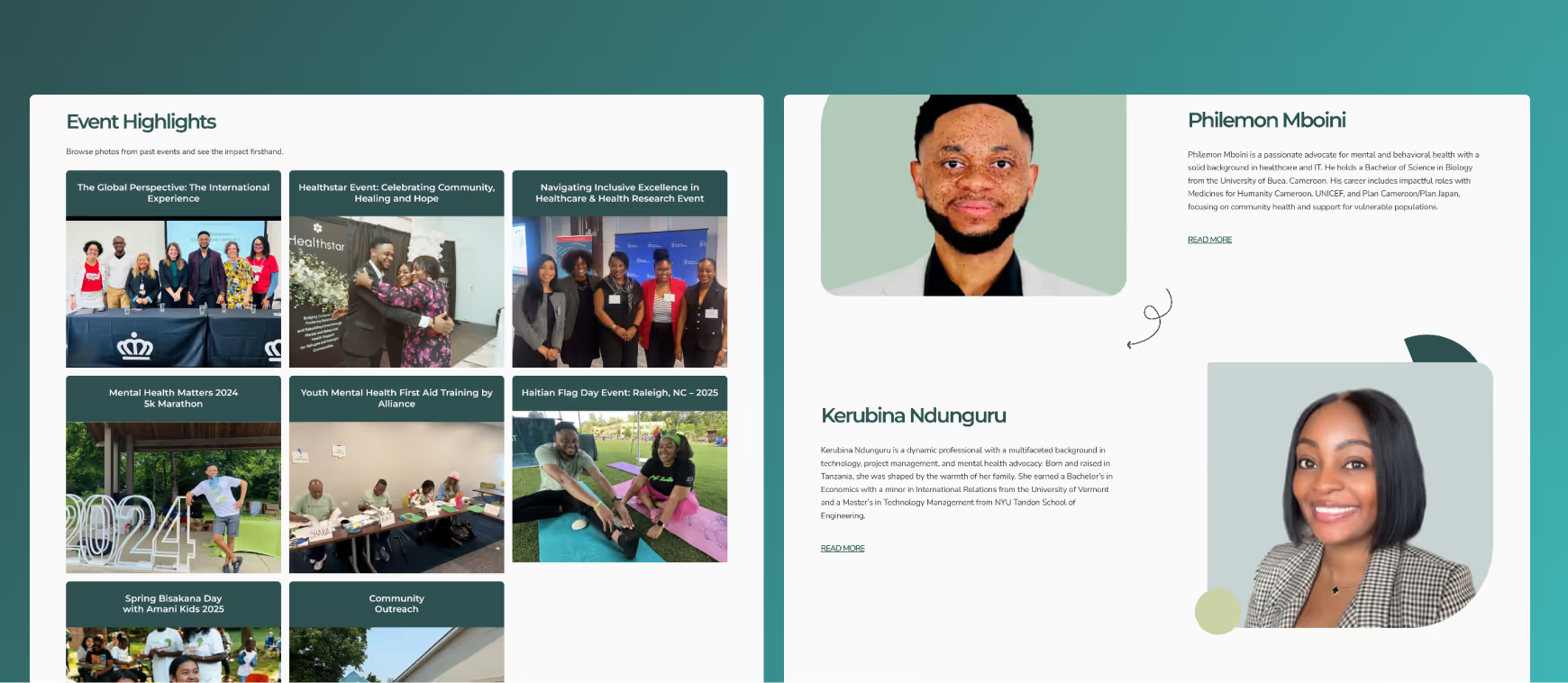
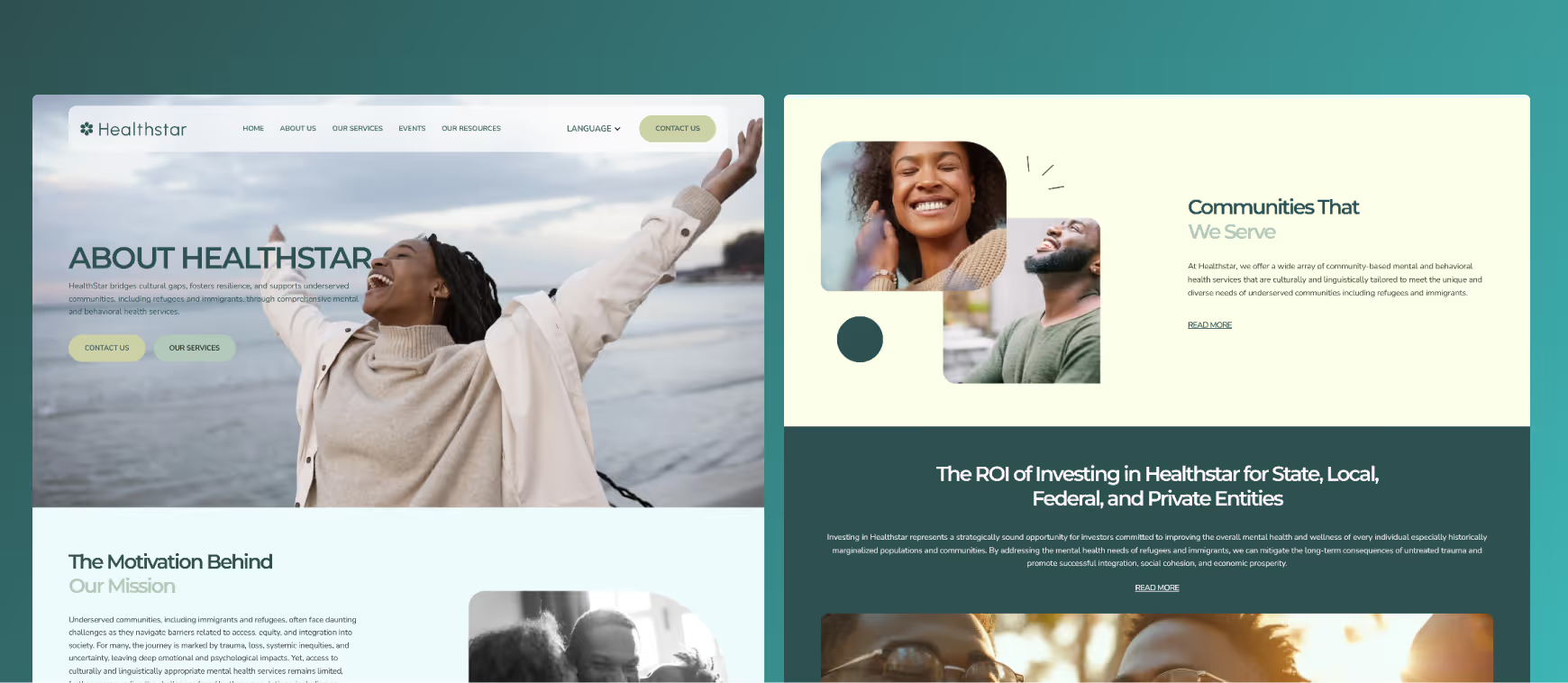
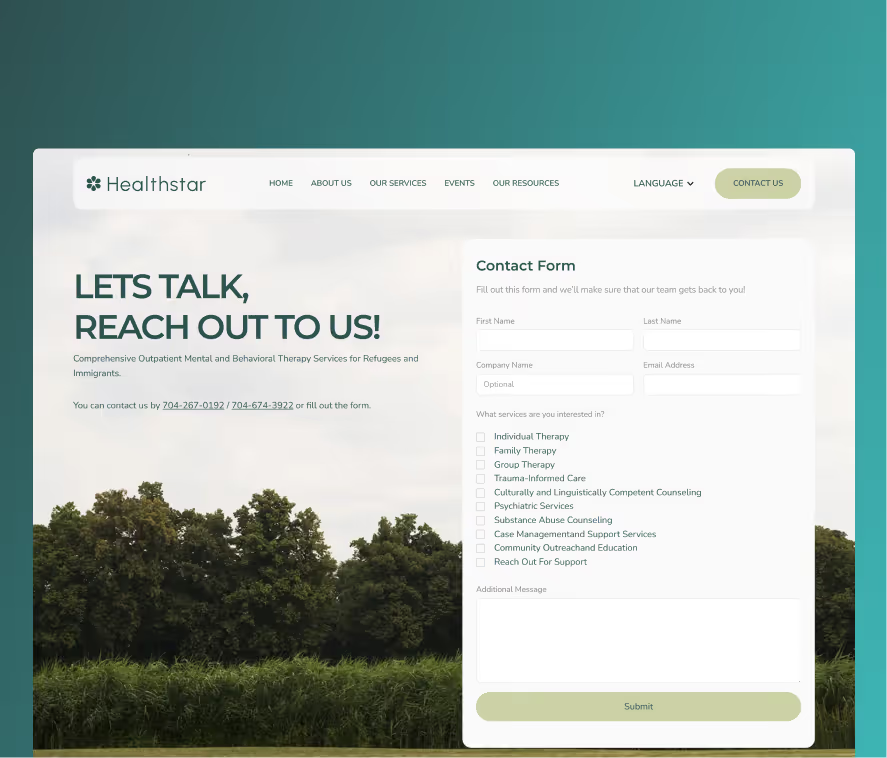
Project Gallery
The new platform was designed around Healthstar’s real audience — refugees, immigrants, healthcare professionals, community partners, and supporters.
The experience combines multilingual access, responsive layouts, service information, community resources, and performance-focused implementation across desktop and mobile.
The Final Result
Healthstar already had the mission.
They already had the expertise.
They already had the people and relationships needed to provide culturally and linguistically sensitive mental health support.
What they didn’t have was a digital platform capable of connecting that work with the people who needed it.
Happiworks built that platform from zero.
The result is a fast, accessible, multilingual digital presence designed to help families find Healthstar, understand its services, and take the next step.
It also gives community partners, supporters, and grant committees somewhere credible to learn about the organization and its work.
The website is no longer simply a digital brochure.
It is Healthstar’s digital front door.
Visit Healthstar
The new website gives Healthstar a fast, accessible, multilingual digital presence built to help the families who need it most actually find their way in.
Built to perform.
The work was designed to improve the experience — and create measurable commercial impact.
Projects Closed
Revenue Generated
Unique Layouts
Scope of work.
The disciplines and capabilities brought together for this project.
Recent Work, Real Results.


Give Us 3 Minutes. We'll Show You Exactly What's Costing You Leads.
Look - this isn't some auto-generated checklist spit out by software. Rebecca and Mario, the two people who actually build your site, go through yours by hand. Page speed. Conversion gaps. Whatever's quietly bleeding you leads right now. Then you get it back within 24 hours. No sales pitch. No "book a call to learn more." Just a straight answer to the one question you actually care about: what's broken, and what do you fix first.