
Your Nonprofit Is Doing Important Work. Your Website Might Be Making It Look Small.
North Carolina Obesity Society Case Study: Turning a Basic Site into a High-Performance, Mission-Driven Platform
The Challenge
There’s a moment that happens hundreds of times a year for organizations like yours.
A grant committee member pulls up your website to verify your credibility before approving funding. A healthcare professional considers partnering with you and wants to see your reach. A first-time donor, moved by your mission, clicks the link in your email — and lands on a page that feels outdated, loads slowly, or makes giving feel harder than it should be.
In that moment, your real-world impact doesn’t matter. What’s on screen does.
And most nonprofit leaders never see this happening. Because the mission is always more urgent than the website. There’s always a more pressing reason to delay the redesign. The site works well enough. People who know you, trust you.
But the people who don’t know you yet — the major donors, the grant committees, the medical professionals you need at the table — they’re making a decision about your organization in 3 seconds based on something you haven’t updated in years.
The North Carolina Obesity Society understood their mission deeply. They had real community impact, meaningful medical advocacy work, and a growing network of healthcare professionals and supporters.
Their website made none of that visible.
There was:
- No streamlined donation path
- No event infrastructure
- No design that reflected the seriousness of their work
- No clear website structure that communicated their real-world impact
Willing donors were hitting friction and leaving. Potential partners were landing on a page that didn’t match the organization they were about to invest in.
The Growth Bottlenecks
An inadequate digital presence directly limits a nonprofit’s ability to fundraise and build community.
Before the Happiworks redesign, the North Carolina Obesity Society faced three major hurdles:
| Bottleneck | What was happening | Business impact |
|---|---|---|
| The Credibility Gap | A basic, unoptimized website diluted the professional authority of a medical advocacy society | Healthcare professionals and donors could receive a weaker first impression than the organization deserved |
| Friction in Fundraising | Donation pathways were not integrated or streamlined | Willing supporters faced unnecessary steps that could lead to abandoned contributions |
| Static Community Outreach | There was no built-in architecture for managing and promoting seminars, medical events, or community initiatives | Outreach efforts were harder to manage, promote, and scale |
The Credibility Gap
A basic, unoptimized website diluted the professional authority of a medical advocacy society, risking low user engagement from healthcare professionals and donors.
Friction in Fundraising
The absence of integrated, streamlined donation links forced willing supporters to jump through hoops, leading to abandoned contributions.
Static Community Outreach
With no built-in architecture to manage or promote upcoming seminars, medical events, or community initiatives, outreach efforts were severely constrained.
The Strategy
The process had three phases:
-
Rebuild the information architecture around the two actions that matter most — donating and engaging with events.
-
Design a UI that communicates medical authority and community trust without clinical coldness.
-
Engineer performance that removes every technical excuse a hesitant donor or partner might have to leave.
This is specifically what we build for mission-driven organizations whose digital presence needs to match the weight of their work.
What Happiworks Delivered
The gap between their real-world credibility and their digital credibility was quietly costing them — in donations, in partnerships, and in the trust they’d worked hard to earn.
After partnering with Happiworks, that gap closed.
The redesigned platform now reflects the scale and seriousness of their advocacy from the first second a visitor lands.
Healthcare professionals, donors, and community members arrive at a site that immediately communicates authority — not because it’s flashy, but because it’s fast, stable, and purpose-built for their audience.
Donation paths are now prominent and frictionless. Event infrastructure lets the team showcase seminars and community initiatives without developer support.
Performance Results
| Metric | Result | What it means |
|---|---|---|
| GTmetrix Grade | A — 94% Performance / 95% Structure | Strong technical performance and site structure |
| Google PageSpeed Performance | 96/100 | High-performing experience across the core page-speed metrics |
| First Contentful Paint | 0.6 seconds | The page’s initial content appears extremely quickly |
| Cumulative Layout Shift | 0 | No measurable layout movement during loading |
| Accessibility Score | 84/100 | A stronger foundation for users with different accessibility needs |
More importantly, the internal team can now update events, add resources, and manage content without touching a developer.
The infrastructure scales with the mission.
Key Business Takeaways
Speed Validates Credibility
A fast, stable web experience honors the user’s time and signals organizational professionalism, which is vital for securing high-tier medical partnerships and grants.
Friction-Free Action Drives Funding
Simplifying the user journey directly correlates with increased action. Strategic placement of donation and event engines turns passive traffic into active participants.
Clean Architecture, Longevity
By building a clean, modern CMS structure on Webflow, the society’s internal team can easily add content, list new events, and update resources without relying on ongoing developer support.
What Changed
| Before | After |
|---|---|
| Basic digital presence | Purpose-built nonprofit platform |
| Friction-heavy donation journey | More prominent donation pathways |
| Static community outreach | Event infrastructure |
| Slow, heavy experience | High-performance experience |
| Limited content flexibility | Manageable Webflow CMS |
| Website that undersold the mission | Digital presence aligned with the organization’s work |
Project Gallery
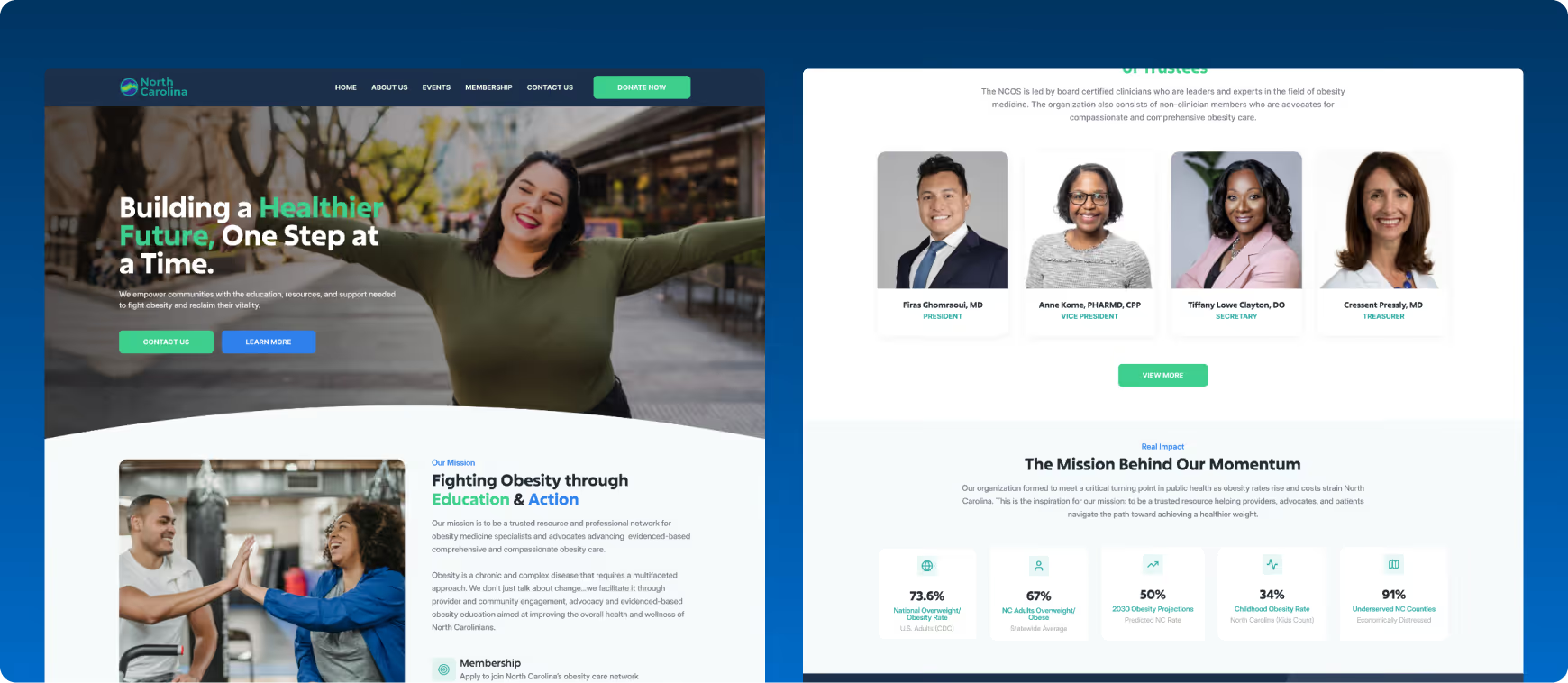
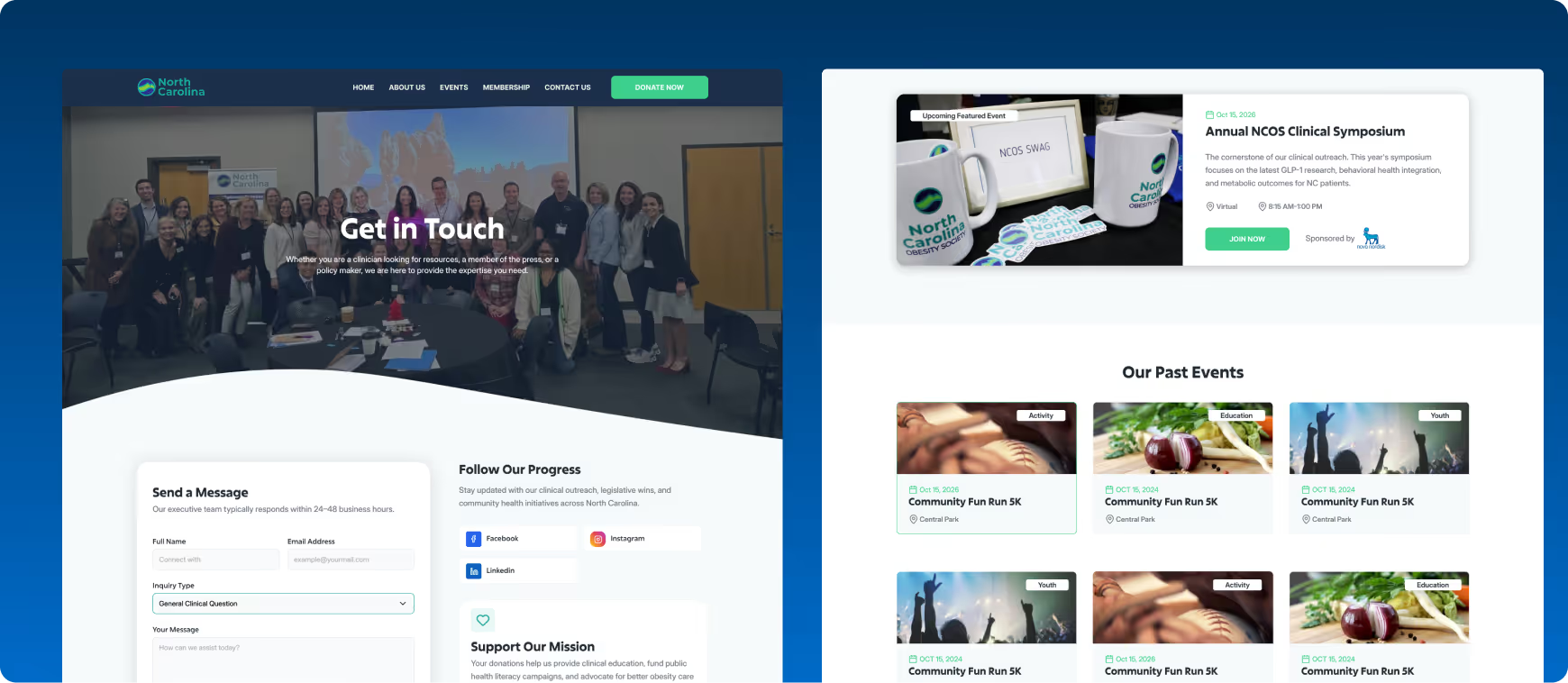
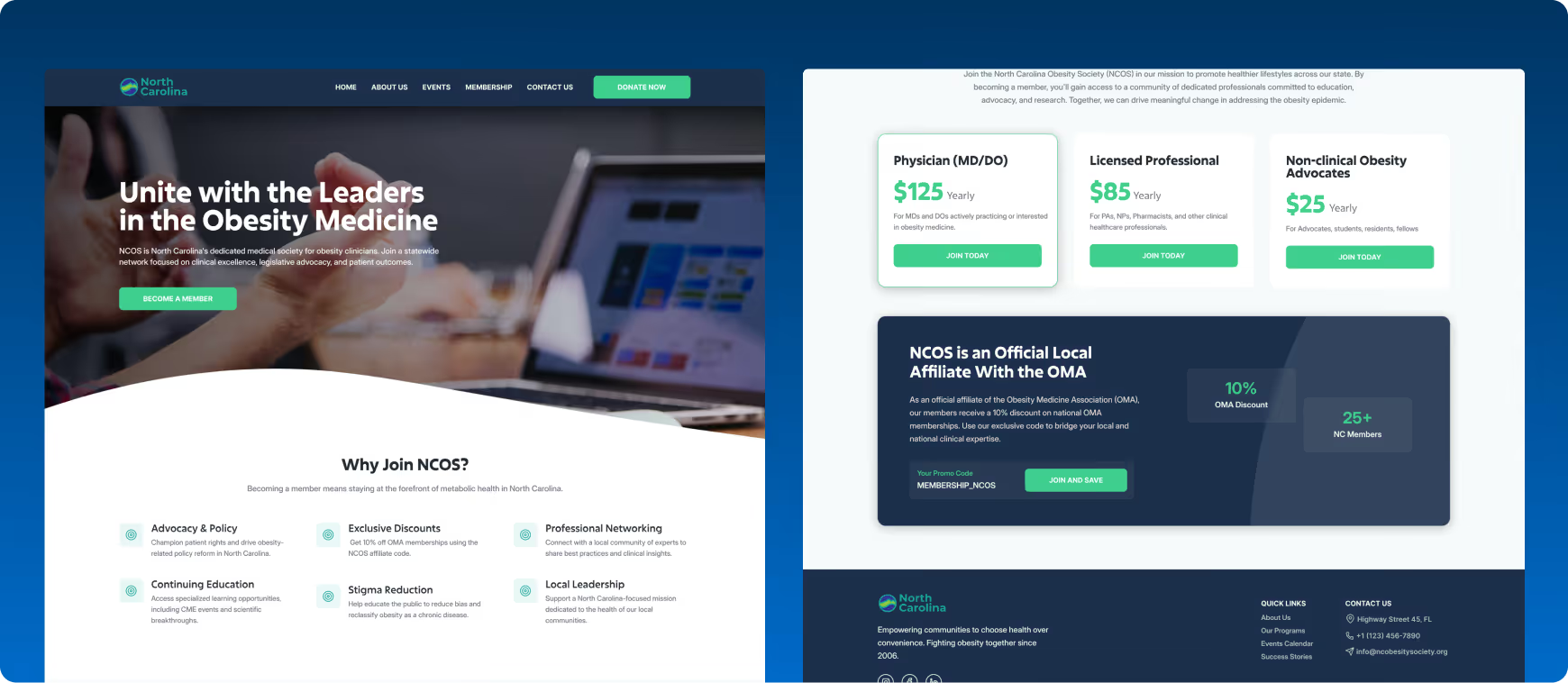
The redesigned platform was built to support the organization’s different audiences — healthcare professionals, advocates, donors, and community members — across desktop and mobile.
The gallery above showcases the new experience, including event discovery, educational resources, responsive layouts, advocacy content, and performance-focused implementation.
The Final Result
The North Carolina Obesity Society already had the mission, the expertise, and the real-world impact.
The challenge was making sure the website communicated that same level of credibility to people encountering the organization for the first time.
Happiworks rebuilt the platform around credibility, performance, accessibility, fundraising, and community engagement.
The result is a faster, more manageable, and more purpose-built website designed to help the organization communicate its work and make it easier for visitors to take action.
The website now has the infrastructure to grow alongside the mission.
Visit North Carolina Obesity Society
The redesigned website gives the North Carolina Obesity Society a faster, more credible, and more donor-friendly digital presence built to match the seriousness of their advocacy work.
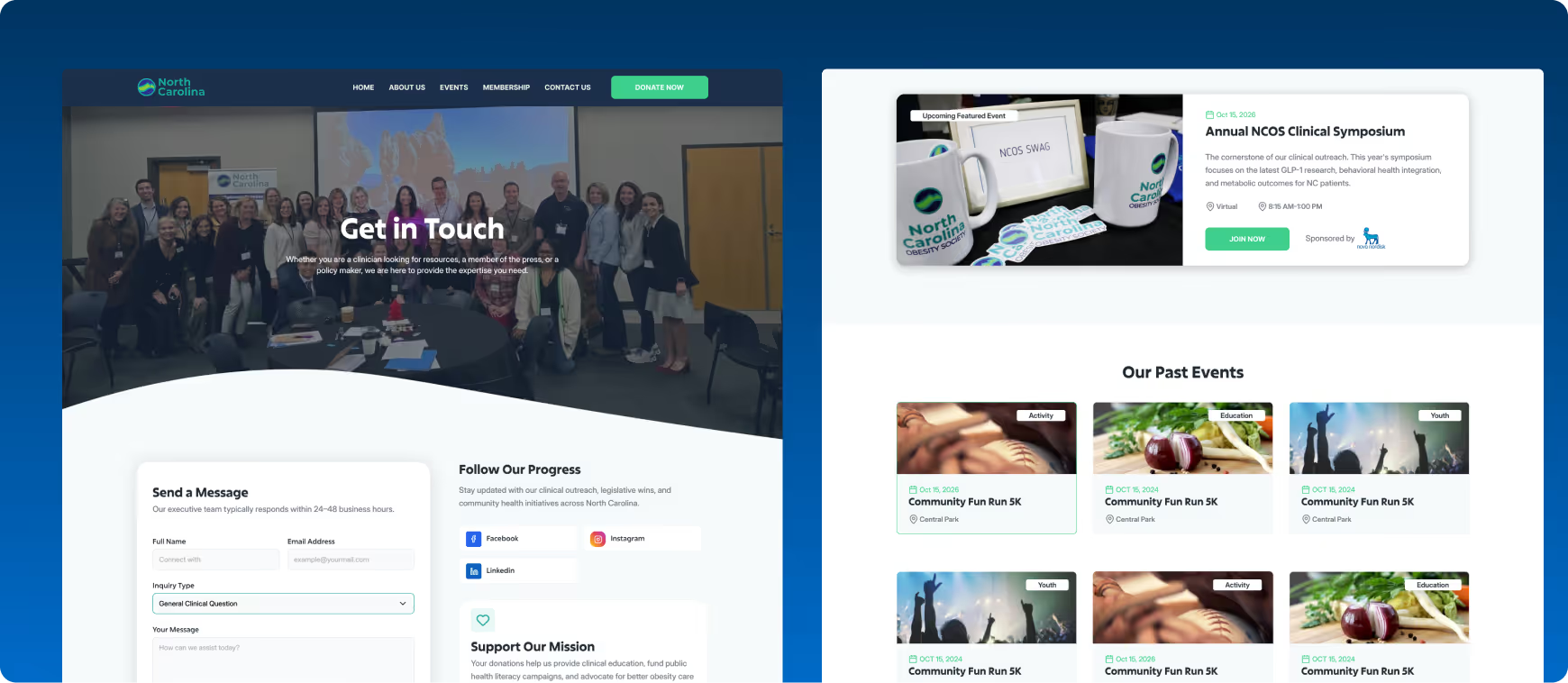
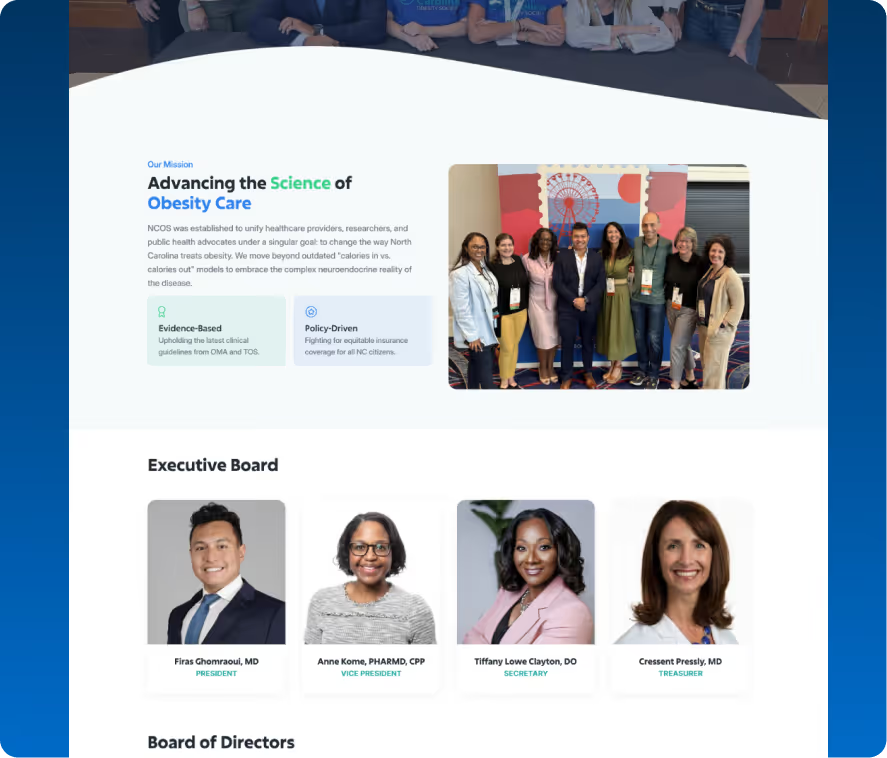
Built to perform.
The work was designed to improve the experience — and create measurable commercial impact.
Page Views in 2 Months
New Users
Unique Layouts
Scope of work.
The disciplines and capabilities brought together for this project.
Recent Work, Real Results.


Give Us 3 Minutes. We'll Show You Exactly What's Costing You Leads.
Look - this isn't some auto-generated checklist spit out by software. Rebecca and Mario, the two people who actually build your site, go through yours by hand. Page speed. Conversion gaps. Whatever's quietly bleeding you leads right now. Then you get it back within 24 hours. No sales pitch. No "book a call to learn more." Just a straight answer to the one question you actually care about: what's broken, and what do you fix first.